
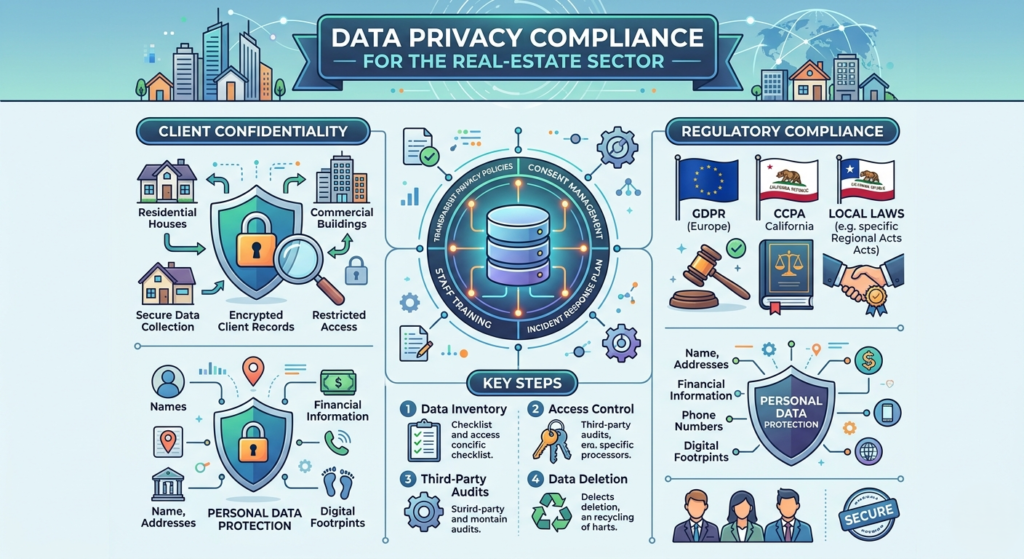
India’s real estate sector, once largely paper-based, is now steadily moving towards a more digital way of working. Today, developers, brokers, property managers, housing societies and PropTech platforms rely heavily on tools like digital KYC, CRM systems, visitor management software, CCTV surveillance, smart access controls and online transaction platforms. While this shift has made processes faster and more efficient, it has also led to the collection of large amounts of personal and sensitive data.
Real estate businesses now handle information such as identity and KYC details, financial and transaction records, biometric and facial recognition data, surveillance footage and even location data. Unlike many other sectors, people like residents, tenants, employees and visitors often don’t have a real choice to opt out of this data collection, making it even more important for organisations to handle it responsibly.
With the introduction of the Digital Personal Data Protection Act, 2023 and the DPDP Rules, 2025, these practices are now under clear legal scrutiny. Data protection is no longer just a legal requirement, it has become a key part of governance, compliance and reputation. The risk of heavy penalties, which can go up to ₹250 crores, along with growing regulatory attention, makes this a serious concern. The consequences go far beyond immediate disruption. Companies may suffer major financial losses due to halted deals, compensation claims and loss of investor confidence. Partnerships with financial institutions and channel partners may be affected and reputational damage can lead to long-term business decline.
At the same time, even though the sector is growing rapidly, many organisations are still not fully prepared for these requirements. Data is often shared across brokers, channel partners, and financial institutions without strong safeguards in place.
Good compliance starts with understanding how data actually moves within the organisation. Real estate firms need to identify what data they collect through forms, CRM systems or site visits and how it is used and who has access to it. Once this is clear, each activity must have a proper legal basis, either consent or legitimate use. Putting systems in place like clear notices, controlled access and security tools helps make data handling safer and more organised.
In real estate, collecting personal data is a routine part of business but it must be done responsibly. Before asking for details like contact information, financial data or KYC
documents, organisations need to take clear and informed consent. Consumers should understand why their data is being collected, how it will be used and how they can withdraw their consent or raise concerns. The DPDP Act emphasises transparency, so that consent cannot be vague or ambiguous. It must be clear, specific and free.
There are situations where taking consent every time may not be practical, especially for regulatory requirements like KYC verification, fraud checks or legal due diligence. The DPDP Act allows such uses but only within clear limits. Data should be used strictly for the purpose it was collected for and not extended to unrelated activities.
Developers, brokers and platforms are responsible for the data they handle. This means they must ensure that the information is accurate, up to date, and protected from misuse. Simple steps like limiting access to authorised personnel, using secure systems and regularly monitoring data usage can make a big difference. If a data breach occurs, it must be reported promptly to both authorities and affected individuals. The Act also requires that data is not stored longer than necessary, encouraging more disciplined data management.
Since, real estate transactions often involve sharing highly sensitive details such as PAN, Aadhaar, bank information and investment records, this kind of data requires extra care. The DPDP Act expects real estate firms to apply stronger safeguards when handling such information, ensuring it is not misused or shared without proper authorisation. Any lapse in protecting this data can lead to serious legal, financial and reputational consequences, making it essential for businesses to treat such information with the highest level of security.
With many real estate firms working with NRI clients and international investors, data often needs to be shared across borders. The DPDP Act allows this but only to countries that are not restricted by the Indian government. This means that real estate firms must be cautious about where and how they transfer data. They also need to ensure that overseas partners follow proper confidentiality and security standards, so that personal data remains protected even when it moves outside India.
Real estate transactions usually require people to share sensitive documents like Aadhaar, PAN, passport details and financial records. While this is often necessary for KYC verification, the DPDP Act makes it clear that only relevant data should be collected, used for a specific purpose and not stored indefinitely. Keeping such documents just for records can create serious compliance risks. Another common issue
is how brokers handle this data. Documents are often shared casually over WhatsApp, email or shared folders.
The Act requires proper consent and clear notice explaining how this data will be used. Informal practices like sharing documents over WhatsApp or email do not meet DPDP security standards, making businesses responsible for any misuse or breach.
CCTV cameras and smart security systems have become a normal part of residential and commercial spaces. However, they also continuously capture personal data, especially when individuals can be identified. Problems arise when people are not properly informed about surveillance, cameras cover more areas than necessary, or footage is stored for too long. Access to such data is also often not restricted. The use of facial recognition or biometric entry systems adds another layer of sensitivity.
Storing footage for long periods or allowing unrestricted access goes against data minimisation and security principles.
Many societies and buildings now use digital systems to track visitors, collecting details like names, phone numbers, ID proofs and vehicle information. This data is often shared between security staff, residents and property managers, sometimes without clear limits. At the same time, developers and housing societies maintain large databases of resident information, including family details, emergency contacts and payment records. These systems are not always well-protected, which increases the risk of data being misused or accessed by unauthorised individuals.
The Act also places responsibility on real estate entities to ensure proper access controls, security measures, and accountability in managing such data.
PropTech platforms heavily rely on user data for targeted advertising and cross-selling services such as loans or interior solutions. However, using personal data for secondary purposes without explicit consent violates the principle of purpose limitation under the DPDP Act. Another challenge lies in the involvement of multiple stakeholders i.e. developers, brokers and third-party service providers wherein roles and responsibilities around data handling are often unclear.
The Act requires clear identification of who is responsible for data handling, especially when multiple parties like developers, brokers and service providers are involved. Without defined roles and proper consent mechanisms, these platforms risk breaching DPDP obligations and facing regulatory consequences.
At Worivo Advisors, we work with real estate developers, brokers and PropTech platforms to simplify compliance with the Digital Personal Data Protection Act, 2023. Our focus is not just on meeting legal requirements but on building systems that are efficient, secure and scalable. We assist in data mapping by helping organisations understand what data they collect, how it flows and where risks exist. We design clear and practical consent and notice frameworks,
ensuring transparency for buyers and investors. We also help streamline internal processes, improve data governance and build systems that integrate compliance into everyday operations. We support real estate businesses in navigating regulatory requirements, helping them interact confidently with authorities and stay prepared for any inquiries or proceedings.
As real estate becomes more digital, privacy is no longer just a legal requirement, it’s a key part of how safe and comfortable people feel in their homes and communities. From CCTV cameras and visitor apps to KYC checks and smart systems, residents and consumers are constantly sharing personal information, often without thinking twice. For developers, RWAs and PropTech platforms, this is a moment to rethink everyday practices. Too much surveillance or holding on to data for too long can make residents and consumers uneasy, even if the intention is security. On the other hand, being open about what data is collected, why it is needed and how it is used can go a long way in building confidence.
Adopting a privacy approach is not just about avoiding penalties, it is about doing things better. Simple steps like limiting data collection, setting clear retention timelines and training staff can make systems more efficient and reduce risks. More importantly, they show residents and consumers that their privacy is taken seriously. Even small steps, like updating privacy policies or simplifying user consent options can make a big difference.
In simple terms, data protection is becoming a foundation of modern real estate. Businesses that adopt it early will not only comply with the law but also build stronger relationships, attract better opportunities and grow in a more sustainable and responsible way.